Automatic Filling Machines

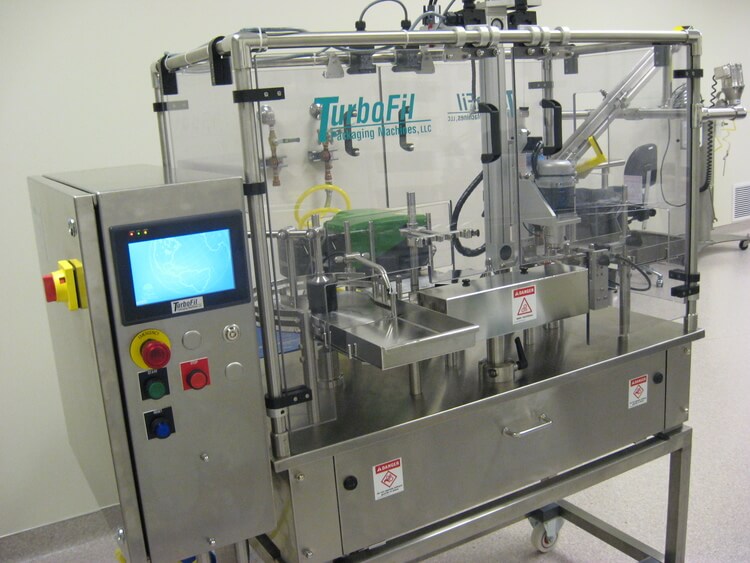
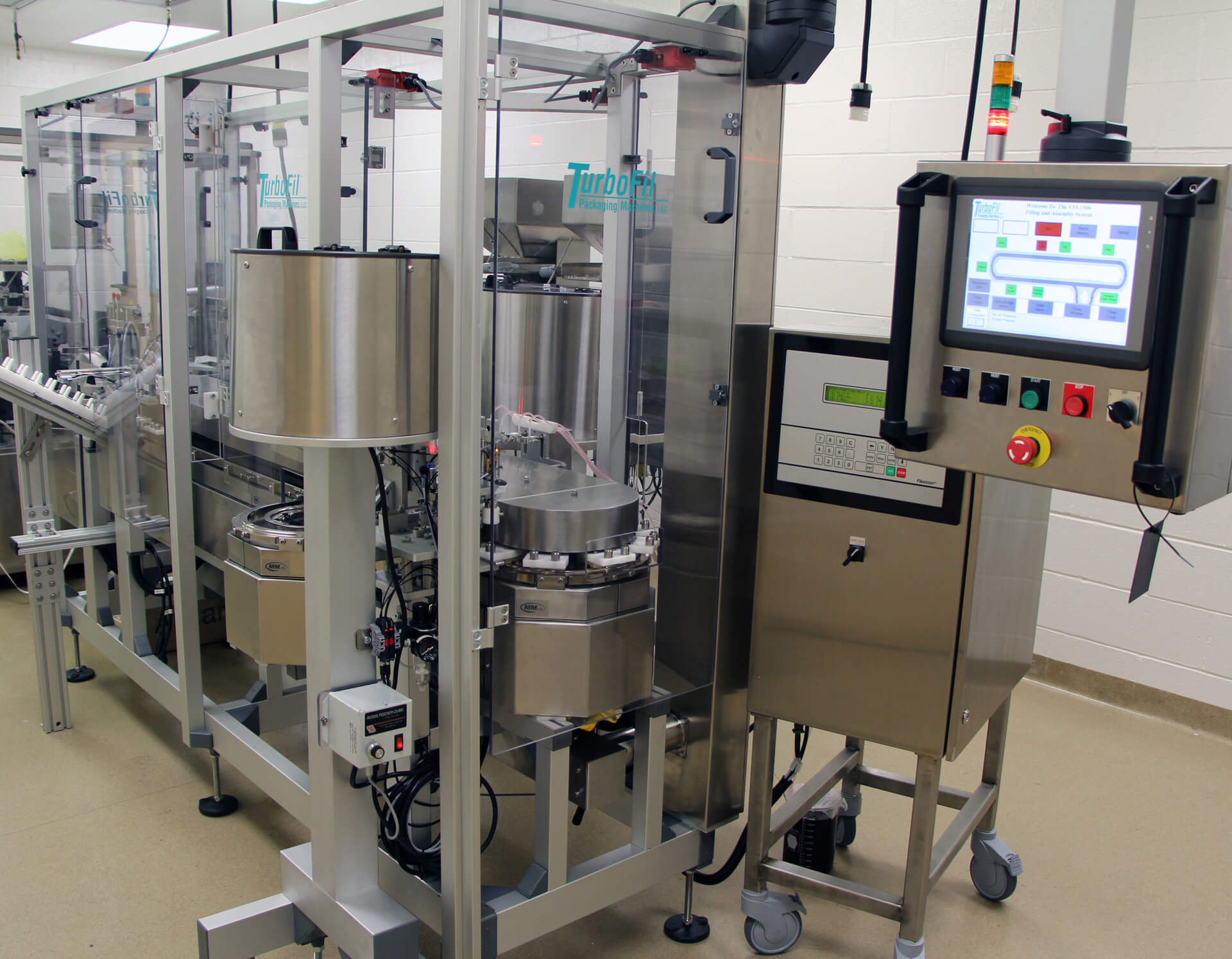
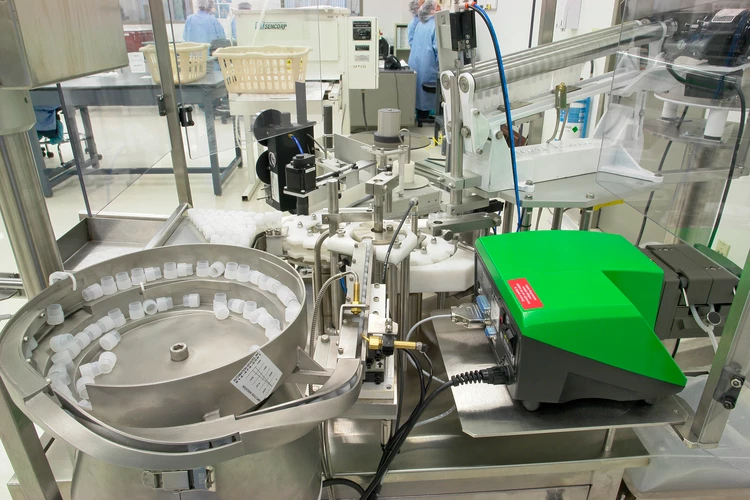
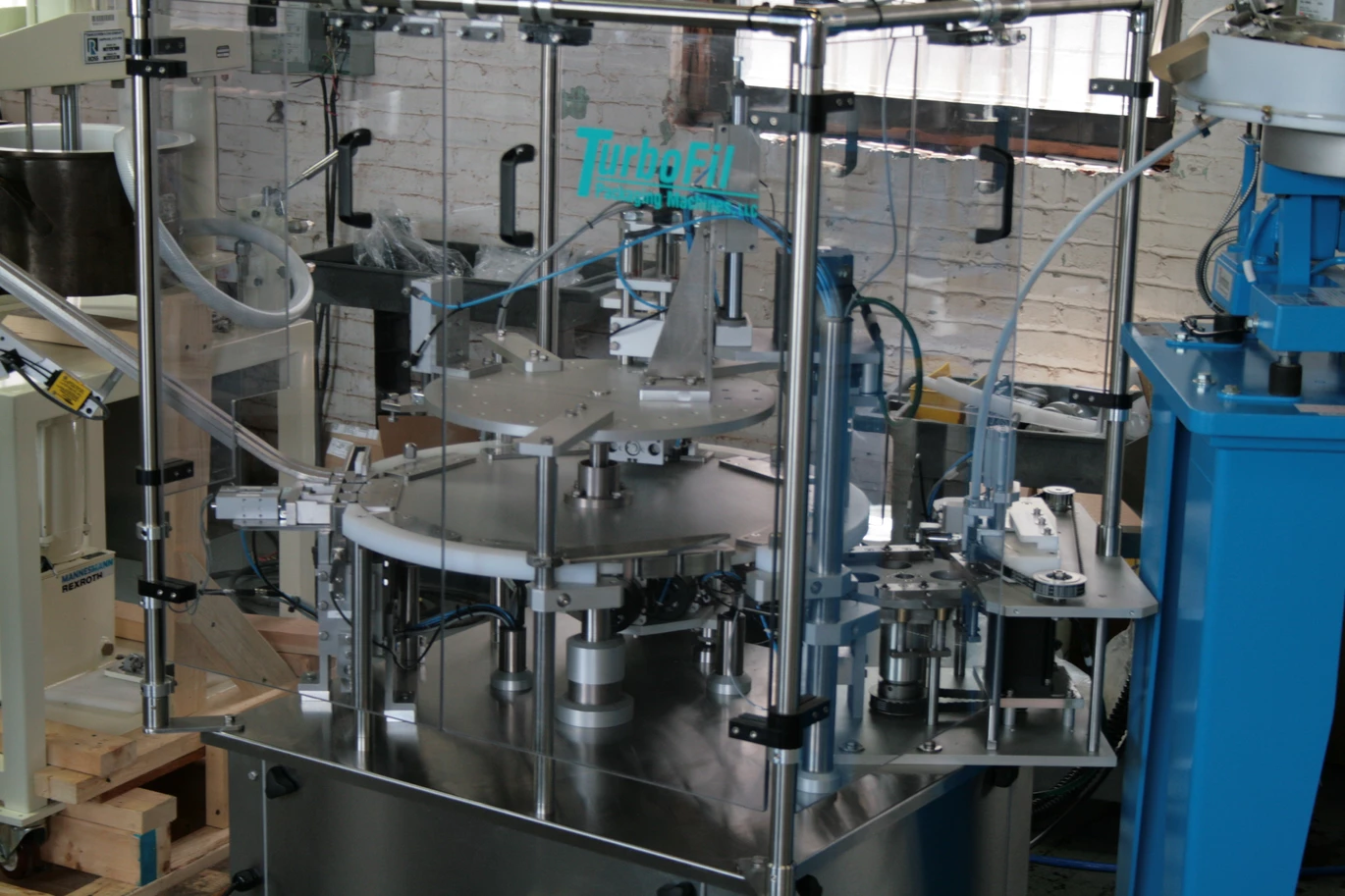
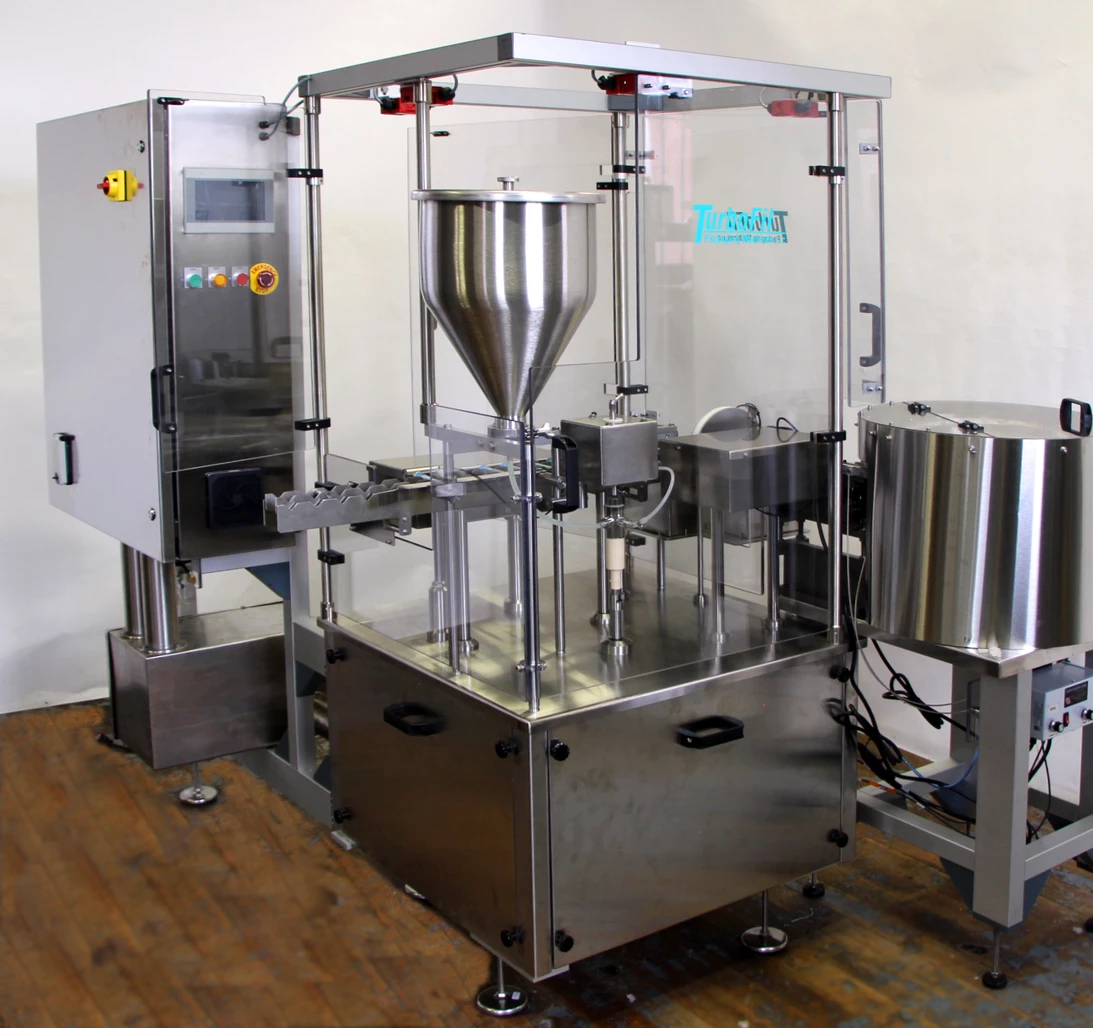
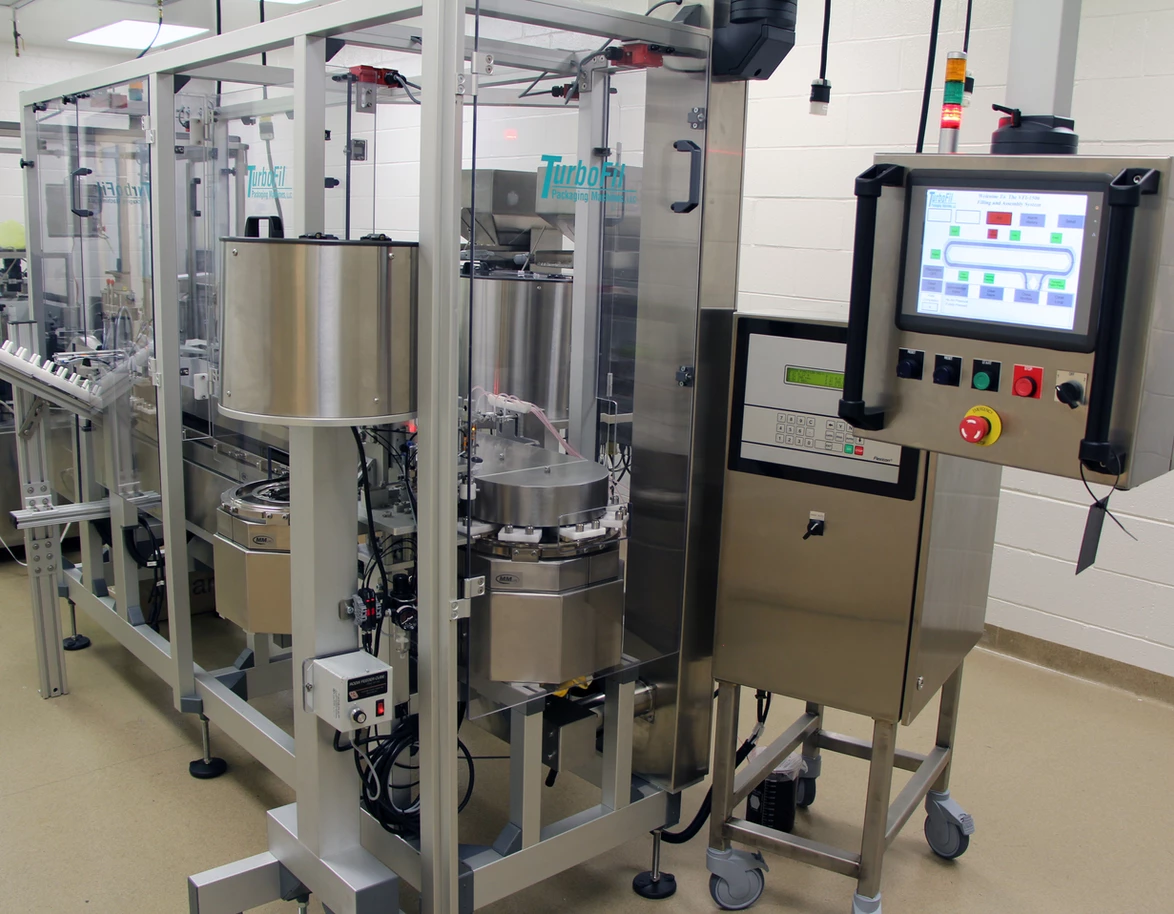
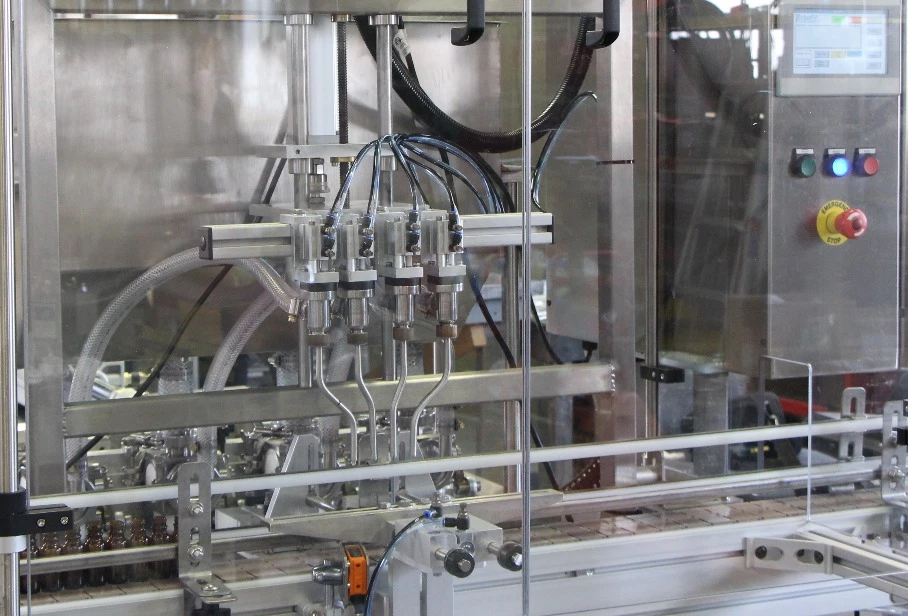
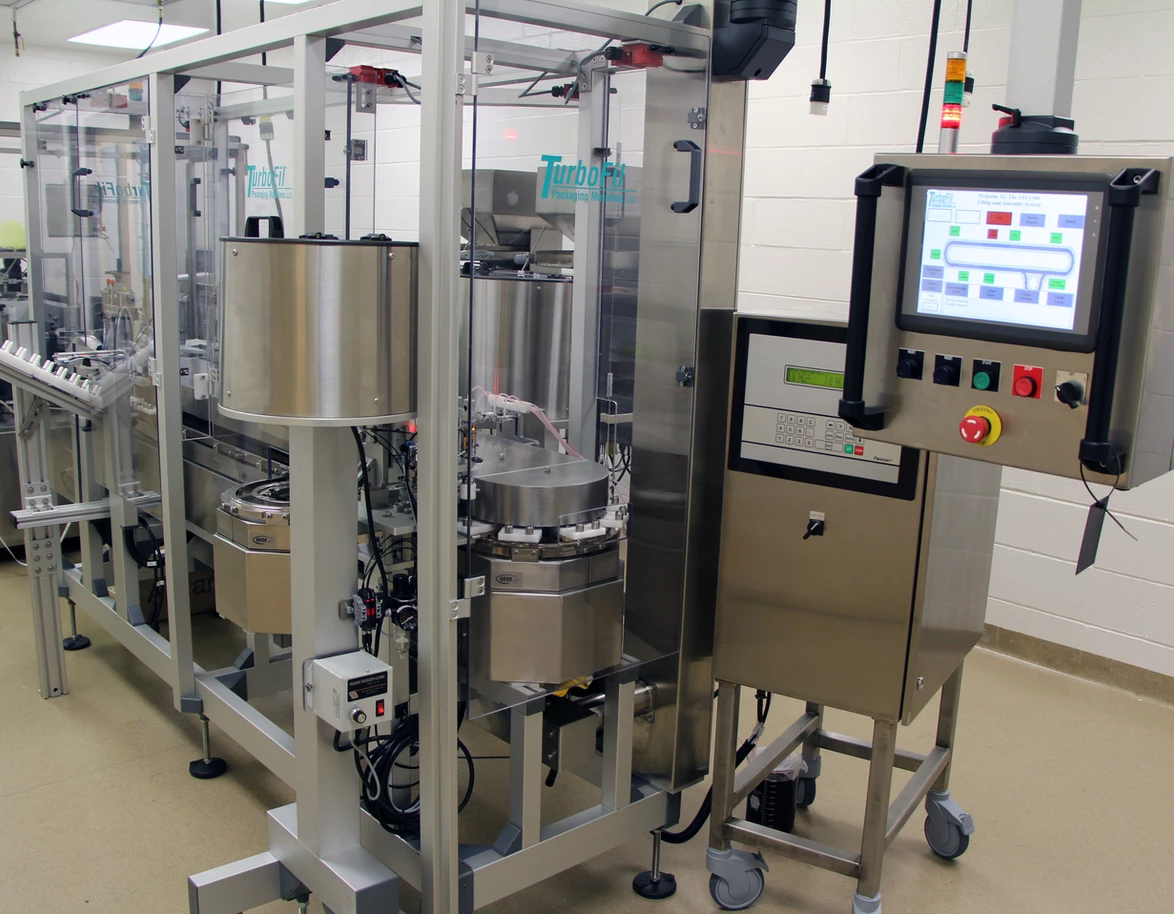
Automatic filling machines are engineered systems designed for continuous, high-throughput liquid and semi-liquid filling with minimal operator involvement. These solutions support commercial production environments where consistent accuracy, repeatability, and integration with downstream processes are critical.

TurboFil’s automatic filling platforms are available across multiple container types and process configurations, making them suitable for pharmaceuticals, biologics, chemicals, cosmetics, nutraceuticals, and other specialty manufacturing applications.

Automatic Filling Machines

  • Function: Modular, small-footprint system for filling, stoppering, and capping vials ranging from 2ml to 100ml—ideal for clinical trials, pilot runs, and small-batch production.

    Container: Handles a wide range of vial sizes with universal format parts

    Output: Up to 30 parts per minute

    Material : Low to high viscosity

  • Tray filling machine for nested vials

    Function: Semi-automatic tray filler for clean room filling of bottles or syringes using servo-controlled XYZ axis for precise dosing.

    Container : Supports various tray-based containers including syringes and bottles

    Output  Suitable for unsupervised, repetitive filling

    Material : Handles low to high viscosity liquids

  • Function: High-speed inline filling system for easy-to-handle bottles; customizable for a wide range of products and viscosities.

    Container  Designed for stable, free-standing bottles; adaptable for various shapes and sizes.

    Output : Processes up to 100 bottles per minute

    Material : Low to high viscosity

  • Function: Compact tabletop monoblock system for automatic filling and capping or crimping of small bottles and vials—no conveyor required.

    Container : Supports glass or plastic bottles and vials

    Output: 15–40 units per minute

    Material : Low to high viscosity liquids

  • Function: Fully automatic filling system for single and dual-barrel syringes with servo-controlled, bottom-up filling for precise control and clean operation.

    Container : Supports single or dual-barrel syringes

    Output : Operates at 15–35 syringes per minute,

    Material : High viscosity

  • Function: Semi-automatic syringe filling and capping system with tip-based filling using an indexing dial and dual-syringe processing.

    Container  Supports a range of single-chamber syringe sizes

    Output : Up to 80 parts per minute

    Material : Low to high viscosity

  • Function: Automated syringe filling and capping system using TurboFil’s TipFil technology for filling through the syringe tip.

    Container : Works with pre-assembled syringes

    Output :  Up to 25 parts per minute

    Material : Low to high viscosity

  • Function: Automated and semi-automated systems for the precise filling and assembly of  UDS (Unidose System) nasal applicators for injectable-free drug delivery.

    Container Compatibility: Compatible with single-use UDS applicators

    Output Capacity: Up to 80 units per minute standard, with options up to 100 ppm

    Material Handling: Inhaled and nasal drug products

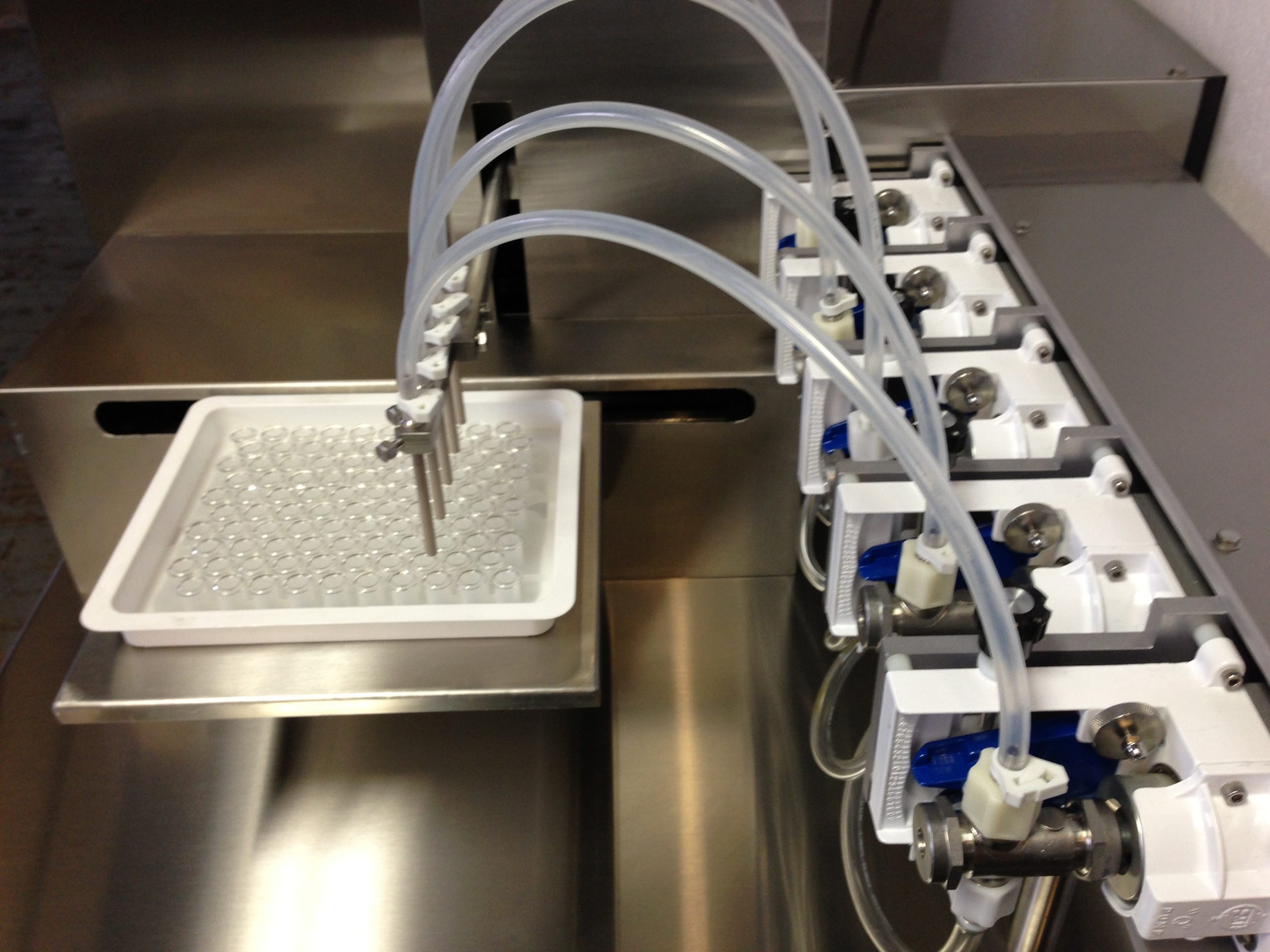
  • Multi-head ceramic filling cart

    Function: Automated multi-head vial and container filling using independently controlled, servo-driven ceramic pumps for precise, repeatable dosing.

    Container: Suitable for open or closed vials, small bottles, and other rigid containers.

    Output: Processes up to 12 containers simultaneously

    Material: Handles low to high viscosity liquids

What Are Automatic Filling Machines?

Automatic filling machines automate the core fill process and are designed for sustained production with high accuracy and repeatability. These systems reduce manual handling and operator requirements, enabling faster throughput and greater consistency compared to semi-automatic or benchtop equipment.

Automatic machines can be integrated with other packaging functions such as stoppering, crimping, capping, inspection, and labeling to create efficient end-to-end production lines.

Frequently Asked Questions

Manufacturers typically select automatic filling machines when throughput, consistency, and process control take precedence over operator flexibility. Typical use cases include:

  • Commercial pharmaceutical and biotech production

  • High-volume cosmetic or chemical filling

  • Continuous manufacturing environments

  • Integrated filling + assembly workflows

Automatic systems are engineered to handle sustained duty cycles, complex container formats, and multi-station filling challenges.

TurboFil automatic filling machines are configured to support a wide range of container formats and industry needs, including:

  • Syringes and pre-fillable injectables

  • Vials for sterile or non-sterile applications

  • UDS/BDS drug delivery devices

  • Bottles and jars for cosmetics or chemicals

  • Cartridges, tubes, and specialty containers

Systems can be tailored for specific workflows and integrated with downstream solutions such as stoppering, crimping, capping, and inspection to create complete packaging lines.

Automatic filling machines can be integrated into complete production lines with minimal disruption. Integration options include:

  • Filling + Stoppering / Assembly

  • Filling + Crimping / Screw Capping

  • Inspection and Vision Systems

  • Labeling and Serialization

  • Automated Product Handling

This flexibility supports scalable manufacturing — from high-volume runs to multi-format production schedules.

Selecting the right system depends on container type, fill volume, product characteristics, production rate, and downstream integration needs. Consultation with a filling applications engineer can help define the optimal configuration.

Automatic filling machines leverage advanced motion control, indexing systems, and dosing technologies to manage a wide variety of fill applications. Common automation elements include:

  • Servo-driven motion for precise container positioning

  • Continuous indexing or rotary platforms for high throughput

  • Integrated dosing technologies matched to product characteristics

  • PLC and HMI systems for recipe control and process monitoring

  • Changeover systems designed for fast transitions between formats

Automation features are selected based on container type, fill volume, product behavior, and production targets.

Talk to an Expert Now